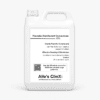
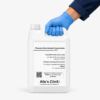
Description
Best suited for. Routine cleaning of compatible hard floors where a pine phenolic system is part of the site programme.
Choose this when. You want a phenolic floor concentrate for routine cleaning, with disinfection use following product-specific instructions.
Choose another product when. Your facility protocol specifically requires chlorine, QAC or another defined disinfectant chemistry.
Highlights
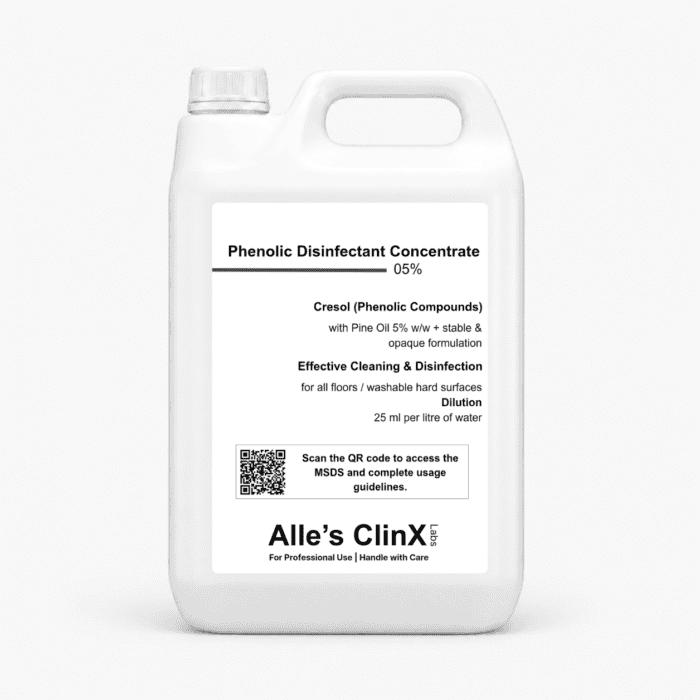
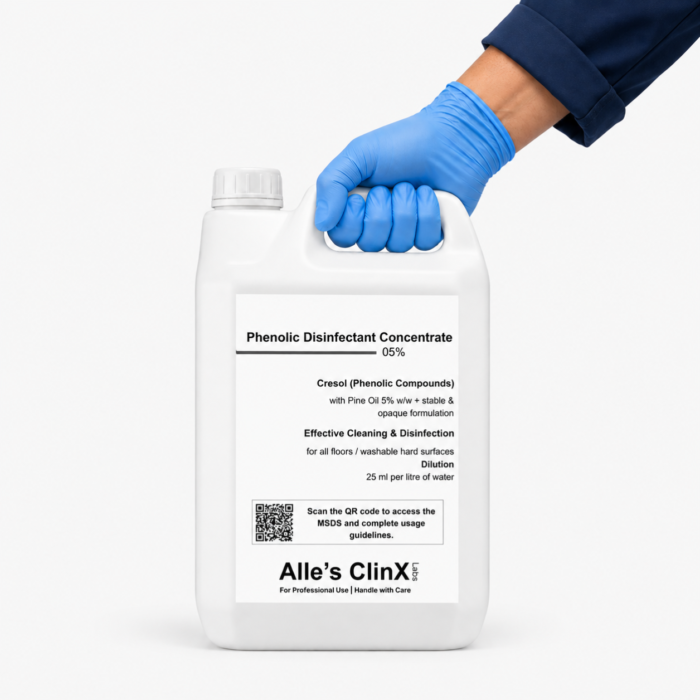
Pine Oil 5% w/w. Pine-oil phenolic formulation for institutional floor cleaning and disinfection programmes.
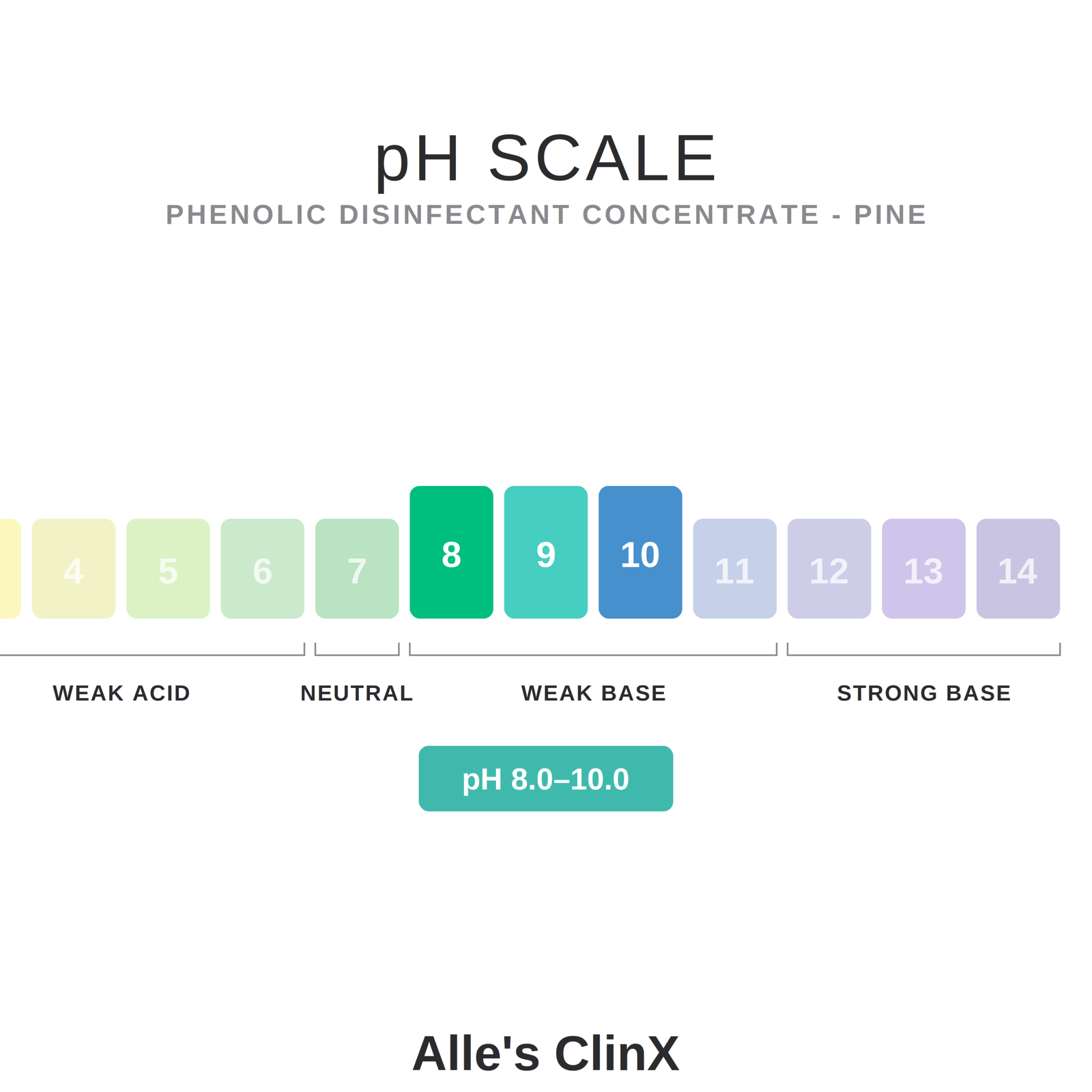
pH 8–10. Where hard-water conditions are significant, confirm working-water quality and site dilution performance before setting the final cleaning dose.
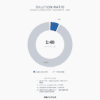
Separate cleaning from disinfection. Use approximately 10–20 ml/L only for routine cleaning. For disinfection, follow the product-specific dilution and wet-contact time supplied with the product.
No rinsing required. Allow the working solution to air-dry after application; rinsing is not required under the stated use instructions.
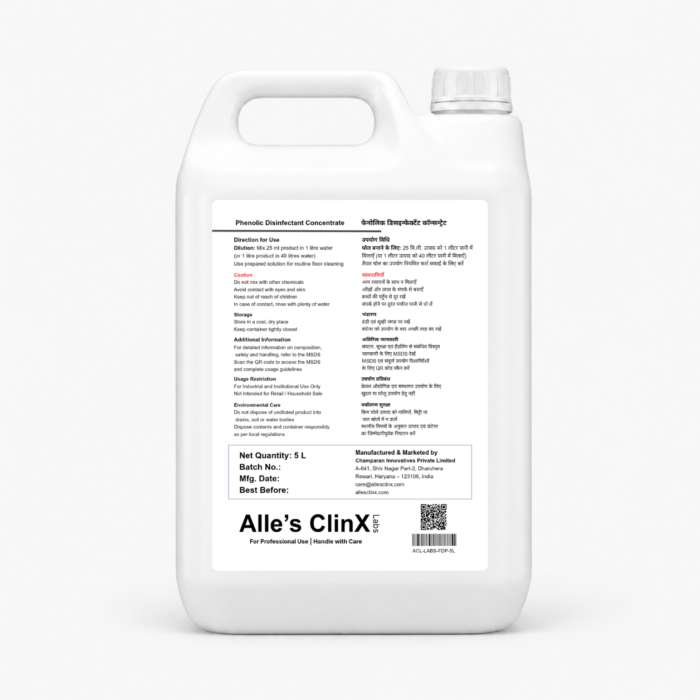
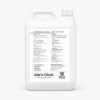
Bilingual label. English and Hindi instructions ensure every staff member can execute the correct protocol regardless of literacy level.
How to use & dilute
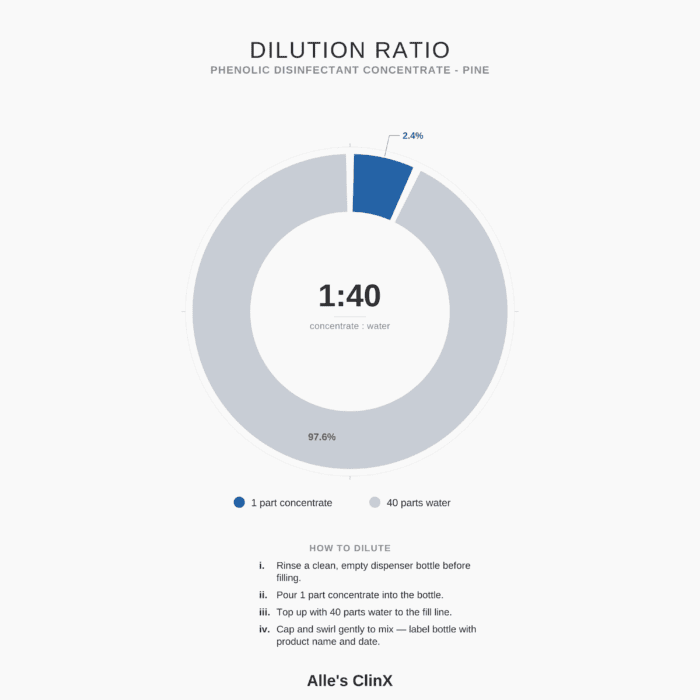
Routine floor cleaning. Start at approximately 10–20 ml/L for routine cleaning and confirm soil removal, residue and floor compatibility before setting the site dose.
Disinfection. Do not use the routine cleaning dose as a disinfection instruction. Follow the product-specific disinfection dilution and wet-contact time supplied with the product.
Operations. If the product-specific disinfection dose is higher than the routine cleaning dose, keep the two recipes clearly separated in the facility SOP and dispenser settings.
Equipment & dispenser compatibility
Compatible equipment. Mop buckets, cotton or microfibre flat-mop systems, and calibrated dilution or proportioning equipment set to the labelled ml-per-litre dose.
Use conditions. For disinfection, the application method must leave the floor sufficiently wet for the stated contact time. Dedicated or thoroughly rinsed dilution equipment is preferred.
Not intended for. A scrubber-dryer should not be treated as a suitable disinfection method unless the site SOP demonstrates that solution recovery does not shorten the required wet-contact time.
The chemistry
How does phenolic disinfection work, and why does pH matter?
Pine oil provides the phenolic component of the formulation. Use the labelled dilution and application instructions for institutional floor-care programmes.
Usage economy
Cleaning-use planning. At an approximate 10–20 ml/L cleaning benchmark, a 5 L pack would dose roughly 250–500 litres of water.
Disinfection planning. Do not calculate disinfectant yield from the routine-cleaning benchmark. Use the product-specific disinfection instructions supplied for that use case.
Reason. Disinfectant performance depends on active concentration, soil load, water quality, textiles and contact time—not simply on matching another brand’s ratio.
Product specifications
Active ingredient
Pine Oil 5% w/w
Active class
Phenolic terpene formulation
pH
8.0–10.0 (alkaline)
Specific gravity
1.01–1.03 at 25°C
Formulation type
Aqueous concentrate
Appearance
Milky white to light amber emulsion
Fragrance
Pine — intended for institutional use
Dilution — standard
Approx. 10–20 ml/L for routine cleaning only
Dilution — heavy soil
Disinfection use: follow the product-specific dilution guidance supplied with the product; no approximate disinfection ratio published
Application
Mop / floor machine
Contact time
Follow the product-specific wet-contact time supplied with the product; no approximate disinfection contact time published
Typical compatible surfaces
Marble, ceramic tile, vinyl, mosaic, concrete, composite flooring
Rinse after use
Follow the product-specific use instructions and facility hygiene procedure; rinse where the surface or application requires it.
PPE
Gloves recommended for concentrate handling
Shelf life
24 months from date of manufacture, unopened
Pack size
5 L concentrate
HSN Code
38089400
Manufactured by
Champaran Innovatives Private Limited, India
Caution & storage
Concentrate handling. Wear gloves when handling concentrate and avoid eye contact. Use only the measured cleaning or disinfection dilution specified for the task.
Do not mix. Do not combine with bleach, chlorine products, acids, other disinfectants or detergents in the same bucket or dispenser.
Storage. Keep tightly closed and upright away from heat, direct sunlight, food and incompatible oxidising chemicals. Prevent access by untrained users.
Safety & procurement
Safety data / product-specific documentation. care@allesclinx.com
Bulk & institutional procurement. procurement@allesclinx.com