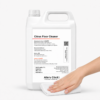


Description
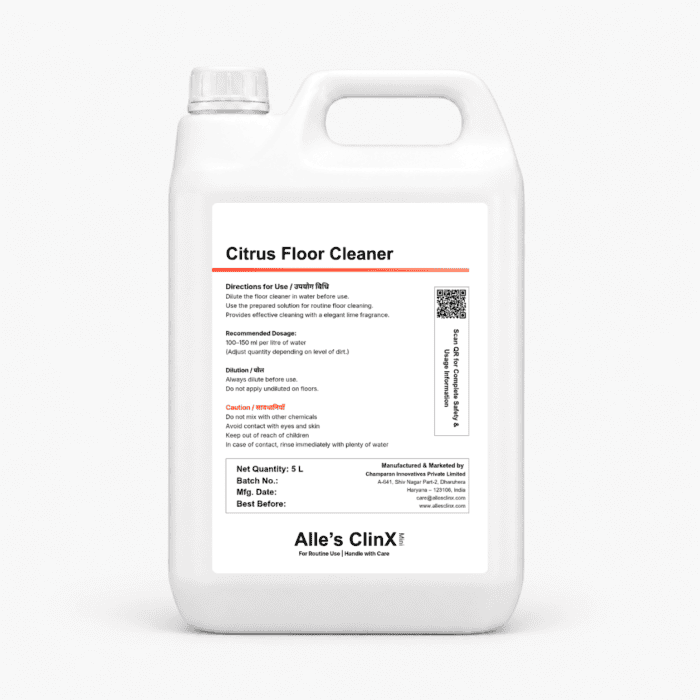
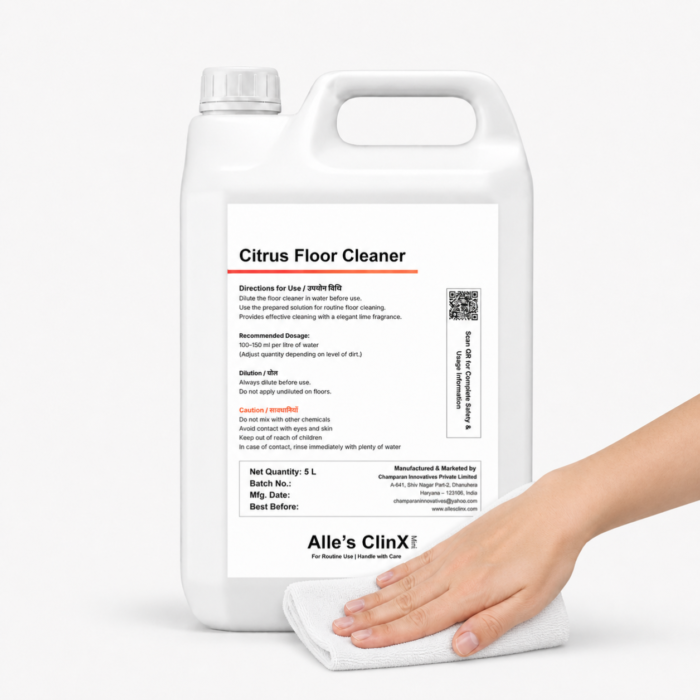
Best suited for. Routine institutional mopping of tile, marble, granite, mosaic, vinyl and other compatible sealed hard floors.
Choose this when. You want a low-dose daily floor cleaner for normal foot-traffic soil and routine housekeeping.
Choose another product when. You need disinfection, heavy oil and grease removal, or mineral-scale treatment.
Highlights
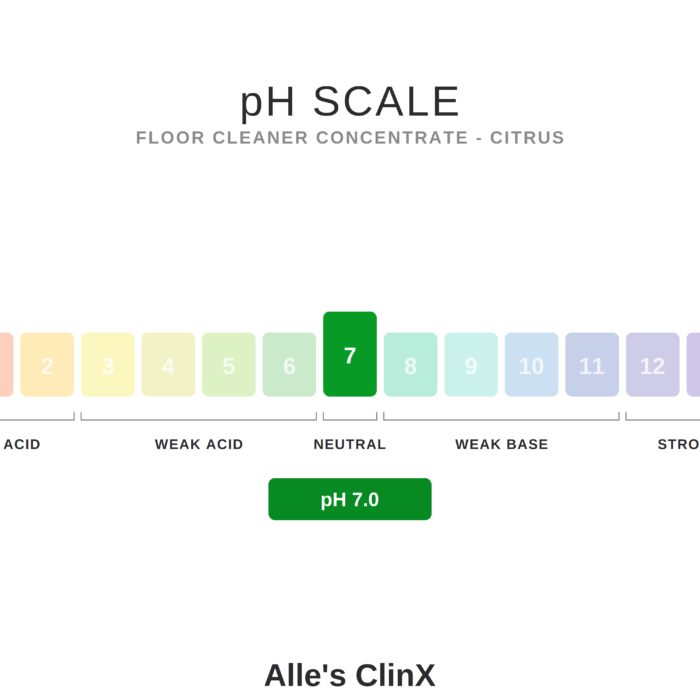
Neutral pH. Suitable for the listed compatible surfaces and routine institutional floor care without unnecessary alkalinity.
Effective surfactant system. Lifts daily dust, foot-traffic soil and light surface grime for routine mopping.
Fresh lime fragrance. The bright, citrus-clean scent that makes a freshly mopped floor actually feel fresh — not just look it.
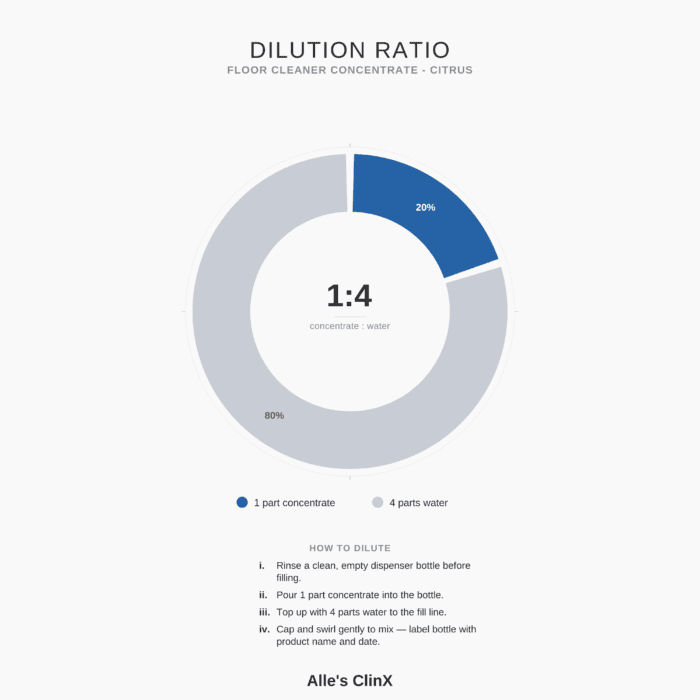
Approx. 5–10 ml/L routine. Start at approximately 5–10 ml/L for routine cleaning and increase toward 15–20 ml/L only when heavier soil requires it.
5-litre value pack. Concentrated institutional floor cleaning with measured dilution for predictable replenishment planning.
How to use & dilute
Routine — 5 L bucket. Add approximately 25–50 ml concentrate.
Routine — 10 L bucket. Add approximately 50–100 ml concentrate. Start at the lower end for daily dust/foot-traffic soil and increase only if the site compatibility check shows it is needed.
Heavier soil. Use approximately 15–20 ml/L, or 150–200 ml for 10 L water. These are benchmark working ranges; final site dosing should be locked after a simple floor trial for residue, foam and cleaning performance.
Equipment & dispenser compatibility
Compatible equipment. Mop buckets, flat-mop systems and measured dilution bottles or proportioning systems set to the stated approx. 5–10 ml per litre dose.
Use conditions. Manual mopping is the recommended default application. Scrubber-dryer use should follow a site compatibility check confirming foam control, floor-finish compatibility and satisfactory recovery.
Not intended for. Do not assume automatic floor-machine compatibility where the machine manufacturer requires a dedicated low-foam detergent.
The chemistry
Surface cleaning works through surfactant chemistry: surfactant molecules have one end that attaches to oil and soil particles and another end that is water-soluble.
When the mop applies the working solution to the floor, the surfactant molecules surround dirt particles, detach them from the floor surface, and hold them suspended in the water to be carried away with the mop.
The neutral pH reduces pH-related surface stress on the listed compatible floors; test other finishes before full use.
Usage economy
Approximate prepared yield. At 5–10 ml/L, a 5 L pack can dose roughly 500–1,000 litres of water for routine cleaning.
Cost control. Use a measuring cup, dosing bottle or proportioner. Free-pouring is more likely to increase cost and residue than improve routine cleaning.
Site dosing. Use the lowest dose that consistently cleans the facility’s actual floor and soil load without haze or excessive foam.
Use measured working-solution consumption to compare product cost per cleaning task. Match the approved dilution to the calculator’s final-solution dosage basis.
Product specifications
Active system
Surfactant blend — general floor cleaner
pH
Neutral
Dilution
Approx. 5–10 ml/L routine; 15–20 ml/L heavier soil — approximate starting range, confirm on site
Fragrance
Fresh lime
Typical compatible surfaces
Tiles, marble, granite, mosaic, vinyl, common sealed hard floors such as tile, marble, granite, mosaic and vinyl
Rinse after use
Not normally required at the routine working dilution; follow the floor-finish or site procedure if residue is visible.
Shelf life
24 months from manufacture date, unopened
Pack size
5 L
HSN Code
34029099
Manufactured by
Champaran Innovatives Private Limited, India
Water quality
Performance can vary with local water hardness. Use the lowest effective dose and follow site water-treatment guidance where hard water causes residue, weak cleaning or excess product use.
Caution & storage
Floor safety. Use the measured working dilution and place wet-floor signage until the cleaned floor is dry. Excess concentrate can increase residue and slip risk.
Chemical mixing. Do not add bleach, disinfectant or another cleaner to the prepared bucket unless the combination is specifically intended and documented.
Storage. Keep the concentrate closed, upright and protected from direct sunlight and excessive heat. Use clean measuring equipment to avoid contamination.
Safety & procurement
Safety data / product-specific documentation. care@allesclinx.com
Bulk & institutional procurement. procurement@allesclinx.com