Limescale Removal: What It Is and How Descaling Works
A technical guide to limescale: how calcium carbonate scale forms, what descaling means, how acid-based descalers work, and why facilities should control scale before it affects equipment and surfaces.
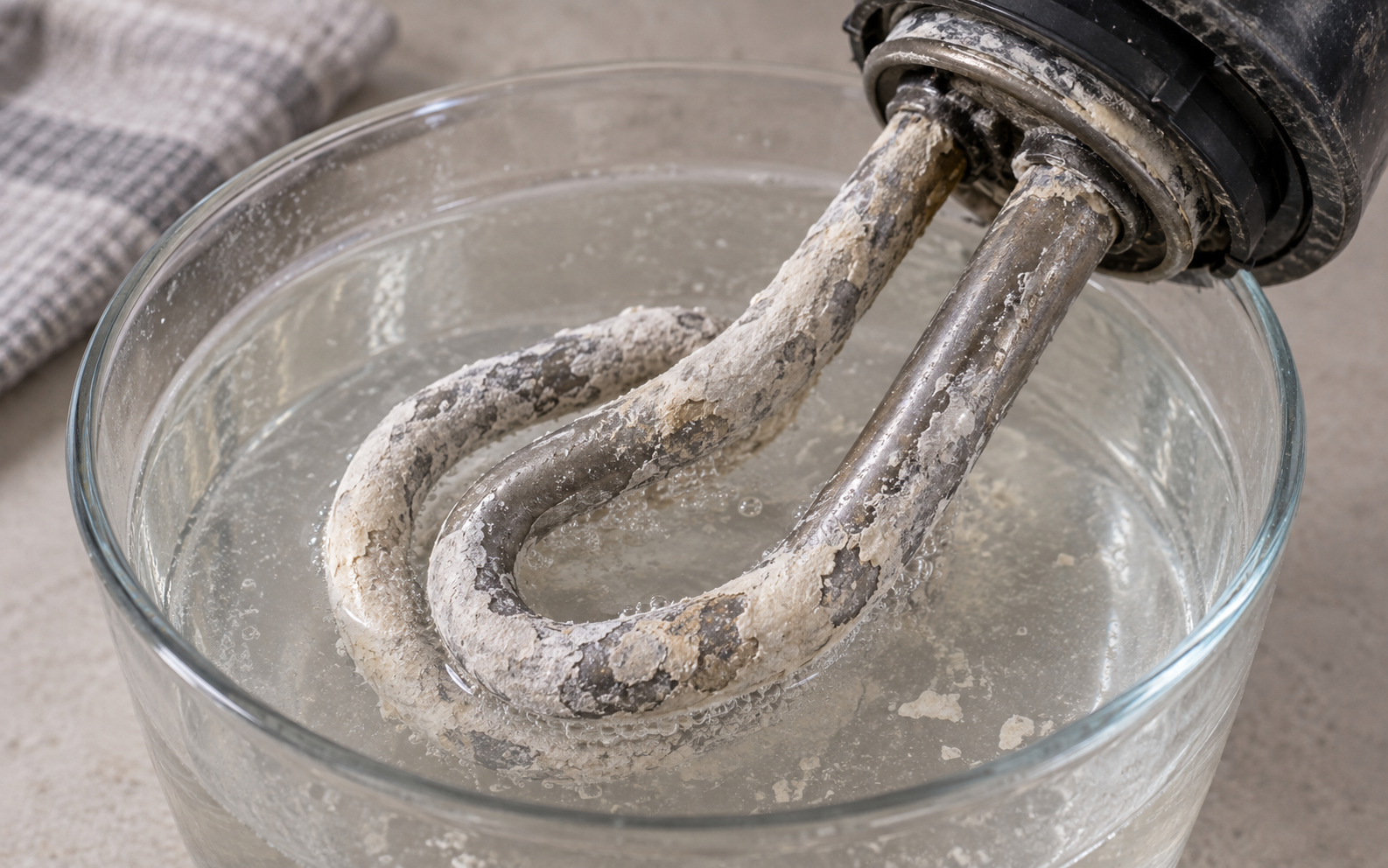
In steam-boiler systems, the U.S. Department of Energy’s industrial energy-efficiency handbook states that boiler scale can reduce efficiency by as much as 10–12%.
Limescale is the hard, chalky mineral deposit that forms when scale-forming minerals in water precipitate onto surfaces. In a washroom it is a cleaning problem. Inside a heat exchanger, boiler, ice machine or water line, the same chemistry becomes an operating-efficiency problem.
Descaling is the controlled removal of that mineral deposit. The chemistry is simple in principle — convert an insoluble scale into material that can be released and rinsed away — but the correct method depends heavily on the surface, equipment and acid sensitivity of the system being treated.
What is limescale?
Limescale is commonly associated with calcium carbonate deposited from hard water. USGS notes that when hard water is heated, solid calcium-carbonate deposits can form. Scale may also contain other mineral components depending on the water chemistry and operating conditions.
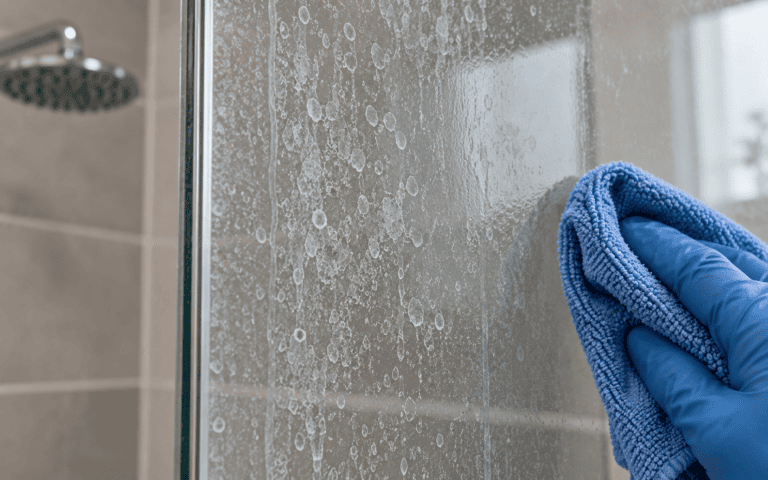
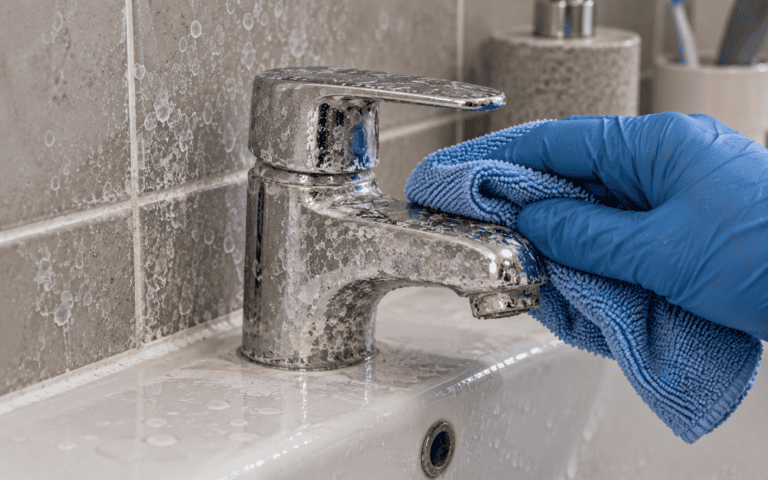
Visually, limescale can appear as a white, off-white or grey crust. It accumulates where water is repeatedly heated, evaporated or concentrated: heating elements, pipes, aerators, taps, showerheads, boilers, steam equipment and some commercial kitchen systems.
Why does limescale form?
Hard water carries dissolved calcium and magnesium. Under changing temperature, concentration, pH and carbonate conditions, some dissolved material can precipitate as solid scale.
Heating is particularly important. USGS specifically links heated hard water with formation of solid calcium-carbonate deposits. In recirculating systems, evaporation can also concentrate dissolved solids until scale-forming conditions are reached.
Why scale matters in equipment
A thin mineral layer can act as an insulating barrier between a heat source and the water or process fluid. The U.S. Department of Energy’s industrial energy-efficiency handbook describes boiler scale as a deposit that reduces heat transfer and states that it can lower boiler efficiency by as much as 10–12% in affected boiler systems.
The same general engineering problem appears in other heat-transfer equipment: scale adds thermal resistance, narrows passages and creates more maintenance work. DOE guidance on cooling towers likewise describes scale as an insulating film on heat-exchanger surfaces.
What does descaling mean?
Descaling is the removal of mineral scale from a surface or internal water-contact system. It can be chemical, mechanical or a controlled combination of both.
Chemical descaling uses a formulation that reacts with or dissolves the mineral deposit. Mechanical descaling physically removes loosened scale through brushing, flushing, scraping or equipment-specific cleaning methods.
How acid descaling works
Calcium carbonate is acid-sensitive. In simplified terms, hydrogen ions from an acid react with carbonate, allowing the solid calcium-carbonate deposit to break down while carbon dioxide and water are formed.
CaCO3 + 2H+ → Ca2+ + CO2 + H2O
That reaction is the reason many commercial descalers are acidic. Formulation design then controls how aggressive the product is, which materials it can contact, how quickly it works and whether corrosion inhibitors or surfactants are included.
Descaler strength is not the same as descaling quality
Facilities often treat descaling as a strength contest: if a mild solution is slow, use more acid. That can create unnecessary corrosion, damage plating, attack grout or seals and increase worker exposure.
A better approach is to specify the least aggressive chemistry that can remove the deposit within an acceptable dwell time. Heavy scale may require repeated controlled cycles rather than one highly aggressive application.
Material compatibility comes first. The chemistry that dissolves calcium-carbonate scale can also attack calcium-carbonate-based building materials. Marble, limestone and travertine are therefore fundamentally different from acid-compatible ceramic or many stainless-steel surfaces.
What types of descalers are used?
| Descaler type | General role | Main caution |
|---|---|---|
| Mild organic-acid systems | Controlled removal of light-to-moderate mineral deposits | Still incompatible with some stones, metals, coatings and seals |
| Stronger inorganic-acid systems | Faster attack on heavy mineral scale in suitable industrial applications | Higher corrosion, fumes and material-compatibility risk |
| Inhibited industrial descalers | Formulated for selected metals/equipment with corrosion-control additives | Must match the equipment metallurgy and manufacturer instructions |
| Non-acid / specialty systems | Used where conventional acid chemistry is unsuitable | Performance depends strongly on the deposit and substrate |
How facilities should descale surfaces
- Confirm the scale. Make sure the deposit is mineral scale rather than grease, soap film, corrosion or another soil.
- Confirm the substrate. Identify metal, ceramic, glass, grout, stone, coating and nearby materials.
- Remove loose soil. Detergent cleaning may be needed before the descaler can reach the mineral deposit.
- Dilute correctly. Use the manufacturer’s working concentration.
- Apply for a controlled dwell time. Do not allow the chemistry to dry unless explicitly instructed.
- Agitate only as permitted. Use compatible brushes or pads.
- Rinse thoroughly. Remove loosened mineral and residual descaler.
- Inspect and repeat if necessary. Thick scale is often safer to remove in stages.
How equipment descaling differs from surface cleaning
An internal water system is not just a larger bathroom fixture. Pumps, sensors, heat exchangers, elastomers, solder, aluminium, copper, stainless steel and other materials may all be present in one circuit.
Equipment descaling should therefore follow the manufacturer’s service procedure or a qualified water-treatment programme. Some systems require circulation, controlled temperature, neutralisation, conductivity or pH checks, flushing and post-treatment inspection.
Why prevention is cheaper than heavy descaling
Once scale becomes thick, removal takes more chemistry, labour and downtime. DOE guidance for commercial ice machines and cooling systems treats scale control as part of routine operation and maintenance, not an occasional cosmetic exercise.
For facilities with recurring scale, the more useful question is often not “Which stronger descaler should we buy?” but “Why is scale forming at this rate?” Water hardness, temperature, evaporation, equipment settings and treatment programme all matter.
Water softening and scale control
Softening removes or exchanges hardness ions before they enter the system. In appropriate facilities, this can reduce scale formation substantially. Other systems may use chemical conditioning, blowdown control, antiscalants or different water-treatment strategies.
DOE guidance for cooling towers specifically notes that softening can be used where calcium and magnesium hardness limits the operating cycle of the system.
Never mix acid descaler with hypochlorite bleach
This rule deserves to be explicit in every institutional descaling SOP. Acid and sodium-hypochlorite products must not be mixed. Acidifying hypochlorite can release toxic chlorine gas.
Separate storage, labelled dilution containers, chemical colour coding and staff training are simple controls that prevent a potentially serious exposure.
When limescale is a cleaning issue — and when it is an engineering issue
Scale on a tap is primarily an appearance and maintenance issue. Scale in a boiler tube, chiller or heat exchanger can change flow, heat transfer, energy use and equipment reliability.
The chemistry is related, but the organisational owner may be different. Housekeeping can maintain fixtures; engineering or maintenance should own process-water and internal-equipment descaling.
Related: Removing Hard-Water Deposits from Taps, Tiles and Bathroom Fixtures
The practical takeaway
Limescale removal is controlled dissolution, not aggressive scrubbing. Facilities should identify the mineral deposit, match the descaler to the substrate, control concentration and dwell time, rinse properly and address the water conditions that caused the scale in the first place.
Where scale affects heated equipment, that work is no longer cosmetic: it is part of energy efficiency, maintenance and asset protection.
Frequently asked questions
What is limescale?
Limescale is a hard mineral deposit commonly rich in calcium carbonate that forms from hard water, especially where water is heated, evaporated or concentrated.
How does descaler remove limescale?
Many descalers use acidic chemistry that reacts with calcium-carbonate scale and converts the solid deposit into material that can be released and rinsed away.
Can limescale reduce equipment efficiency?
Yes. Scale can insulate heat-transfer surfaces; a U.S. Department of Energy industrial handbook states that boiler scale can reduce boiler efficiency by as much as 10–12% in affected systems.
Can acid descaler be used on marble?
Generally no. Marble and other calcareous stones contain calcium carbonate and can be etched by acidic descalers.
Can descaler be mixed with bleach?
No. Acidic products can react with hypochlorite bleach and release toxic chlorine gas.
Sources
U.S. Geological Survey — Hardness of Water.
U.S. Department of Energy / CIBO — Energy Efficiency Handbook.
U.S. Department of Energy — Side Stream Filtration for Cooling Towers.
U.S. Department of Energy — Cooling Tower Management.
Natural Stone Institute — Care & Cleaning of Natural Stone.