Medical-Grade Hygiene Built for NCR Conditions.
Hard-water-stabilised disinfectants, NABH-ready documentation, and zone-mapped protocols for ICU, OT, OPD, and general wards. Clinically compliant from the first delivery.
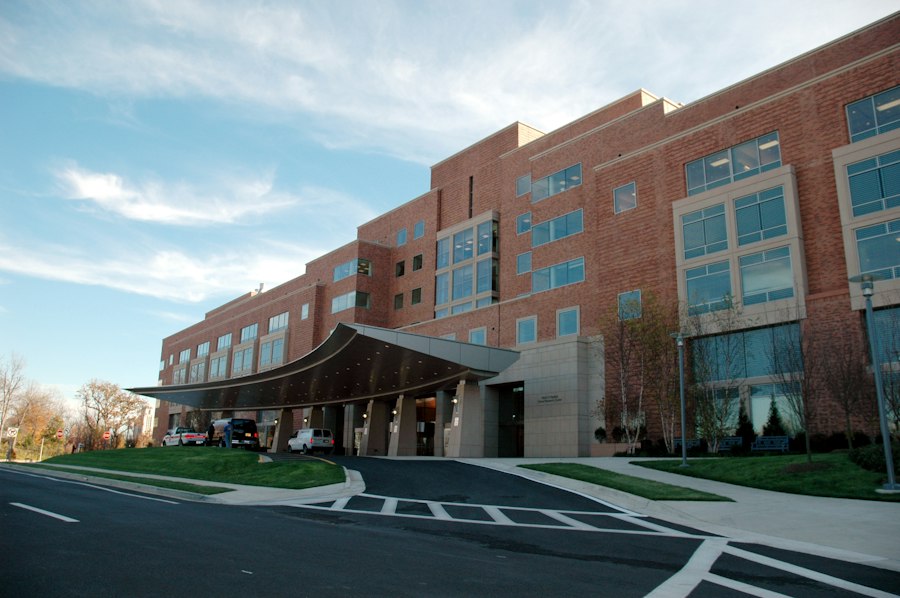
Nearly double the global average. Each case adds 7–10 additional hospital days.
Some pathogens survive on dry surfaces for up to 90 days without intervention.
National cost concentrated in the high-density NCR corridor.
Hygiene failures directly threaten empanelment and revenue continuity.
Most premium imported disinfectants are engineered for European water — TDS 50 to 180 ppm. Delhi NCR ground and municipal water carries 200 to 1,000 ppm TDS. In Gurgaon, Noida, and Faridabad, calcium and magnesium ions bind to active surfactant molecules — reducing antimicrobial efficacy by 30% to 60%.
Beyond chemistry, 85% of facilities lack standardised measuring equipment. Manual dilution causes 25–40% product waste — and in the inverse case, under-dilution allows pathogens to survive on treated surfaces, directly contributing to HAI transmission. Both outcomes cost the institution, clinically and financially.
What does your facility currently purchase?
Select products used across clinical and support zones. Full TCO breakdown →
Based on 36% average cost reduction. ICU and OT zones show the highest savings when disinfectant procurement is consolidated. Request a facility assessment →
Select a dimension to view operational details
Healthcare hygiene failures are rarely about intent — they are structural, chemical, and systemic.
Imported disinfectants lose 30–60% efficacy in NCR’s 200–1,000 ppm TDS water.
85% of facilities lack precision measuring tools — 25–40% waste or under-strength solutions result.
High housekeeping turnover means hygiene knowledge lives in people, not processes.
Built around the specific failure points of NCR healthcare — not imported assumptions.
EDTA and citric acid chelators protect active ingredients up to 1,000 ppm TDS.
Zone-based calculator gives exact dilution ratios per ward — eliminating waste and under-dosing simultaneously.
QR-embedded MSDS in Hindi, English, and regional languages — guidance at point of use.
When the system works, outcomes are measurable — clinically, financially, and for compliance.
Consistent disinfection reduces environmental transmission — the primary HAI vector.
Documented protocols and batch-level CoAs support NABH infection control requirements.
Structured dosing eliminates overuse — stabilising cleaning budgets across all wards.
Infection Control Systems (ICU & OT)
-

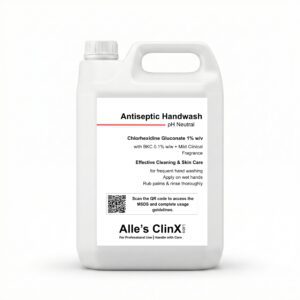
Antiseptic Handwash
₹525.00 -
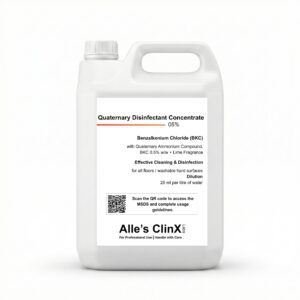
Quaternary Disinfectant Concentrate – BKC
₹790.00 -
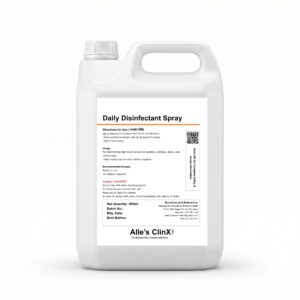
Surface Disinfectant Refill – Lime
₹585.00
Daily Hospital Hygiene
-
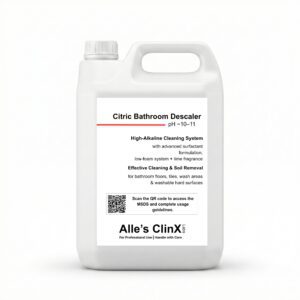
Citric Bathroom Descaler – Alkaline
₹565.00 -
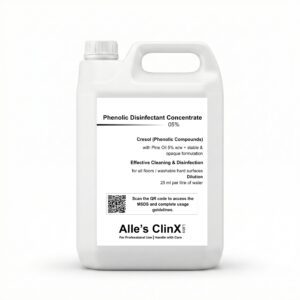
Phenolic Disinfectant Concentrate – Pine
₹650.00 -
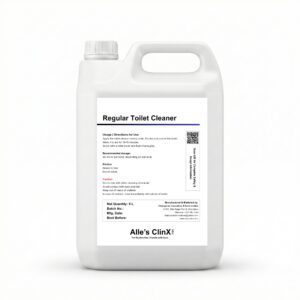
Toilet Cleaner
₹345.00
Heavy-Duty Cleaning & Utility Chemicals
-
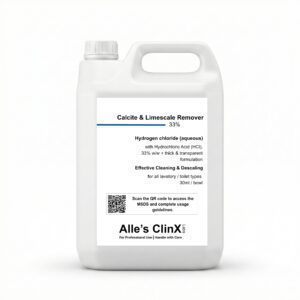
Calcite & Limescale Remover – Acidic
₹680.00 -
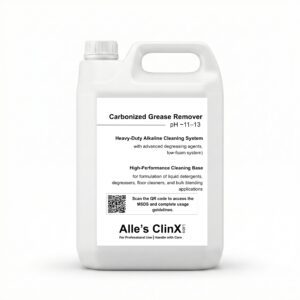
Carbonized Grease Remover
₹1,280.00 -
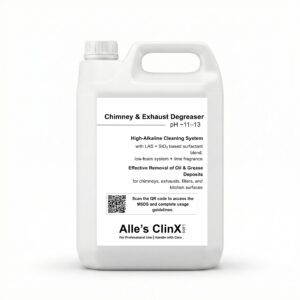
Chimney & Exhaust Degreaser – Alkaline
₹995.00 -
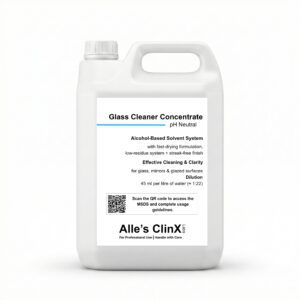
Glass Cleaner Concentrate
₹785.00 -
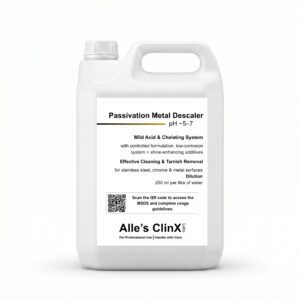
Passivation Metal Descaler
₹1,250.00
Your facility deserves hygiene that works on its own
We work directly with facility managers and procurement heads to assess your environment, map zone classifications, and propose a system that performs — regardless of water chemistry, staff turnover, or shift pressure.
No commitment required.
NCR-based team. Response within 24 hours.